

The Multi-Sport Athlete's Buying Problem
You play pickleball on weekends, hit the gym during the week, and maybe join a recreational baseball league in the summer. That's three sports — and potentially three separate shopping carts full of gear you may or may not actually need.
The good news: buying smart across multiple sports isn't complicated once you know what to look for. This guide breaks it down into practical questions you can ask before any purchase.
Step 1: Separate 'Sport-Specific' from 'Crossover' Gear
Before you buy anything, sort your gear needs into two buckets: things that only work for one sport, and things that carry over between activities.
Crossover gear (one purchase, multiple uses):
- Yoga mats — useful for stretching, warm-ups, and recovery across nearly every sport
- General fitness accessories like resistance bands or agility ladders
- Athletic footwear designed for multi-surface use
Sport-specific gear (you need the right one, no substitutes):
- Rackets and paddles — a pickleball paddle is not a tennis racket
- Helmets rated for specific activities (cycling, snow sports, baseball each have different safety standards)
- Fielding trainers and sport-skill tools built around one discipline
Prioritize crossover purchases first. They give you the most value per dollar before you commit to sport-specific items.
Step 2: Ask How Often You Actually Play Each Sport
Be honest with yourself here. If you play pickleball three times a week and only snowboard once a year, those two sports don't deserve equal budget.
A good rule of thumb: spend more on gear for the sport you play most frequently, and look for mid-range, reliable options for seasonal or occasional activities. You don't need a professional-grade setup for a sport you play four times a year.
For your primary sport, quality matters more — better equipment holds up under regular use and often improves your performance. For secondary sports, focus on safety and basic function over premium features.
Step 3: Don't Skip Safety Equipment
This is the one area where 'good enough' is never the right call, regardless of how often you play. If a sport requires a helmet, buy the right helmet for that sport — not a general-purpose one, and not a hand-me-down from a different activity.
Different sports have different impact profiles, and helmets are engineered specifically for those scenarios. A cycling helmet and a snow sports helmet are not interchangeable, even if they look similar on the shelf.
When you're shopping across multiple sports, safety gear should always be non-negotiable line items in your budget — not areas to cut corners on.
Step 4: Evaluate Skill Level Per Sport Separately
You might be an advanced tennis player and a complete beginner at yoga. Your skill level in one sport has no bearing on the other — and your gear choices shouldn't assume otherwise.
Buying advanced equipment for a sport you're just starting usually wastes money. Beginner and intermediate gear in most categories performs well enough to develop real skill, and you can upgrade once you know the sport is something you'll stick with.
On the flip side, if you're experienced in a sport and playing regularly, investing in quality equipment pays off. Better gear at the right skill level means better performance and fewer replacements over time.
Step 5: Think About Storage and Portability
Multi-sport athletes have a practical problem that single-sport players don't: where does all this stuff go? Before buying, consider how bulky an item is, whether it needs special storage conditions, and how easy it is to transport.
A thick yoga mat with a carry strap, for example, is far more practical for someone who moves between the gym and home than a mat that requires a separate bag or rolls awkwardly. Small details like carry handles and compact designs matter a lot when you're managing gear across multiple activities.
If storage space is limited, lean toward gear that's compact, multipurpose, or easy to stack and store.
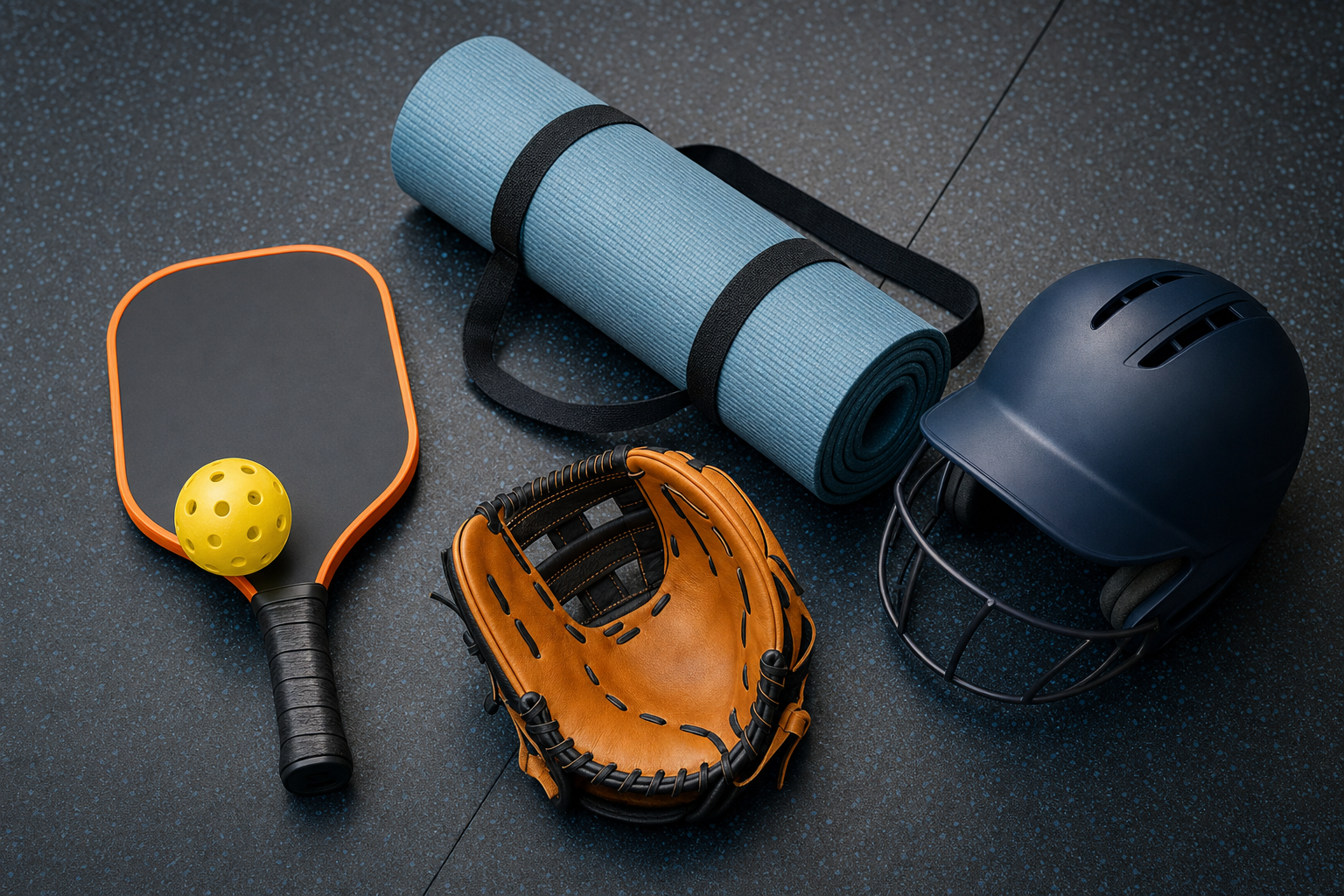
Step 6: Build Your Kit in Phases, Not All at Once
One of the biggest mistakes multi-sport athletes make is trying to fully equip themselves for every sport at the same time. That approach leads to overspending, buyer's remorse, and a garage full of gear you barely use.
Instead, build your kit in phases:
- Phase 1: Crossover and safety gear — the items that apply across activities and protect you
- Phase 2: Equipment for your primary sport, at the right level for your current skill
- Phase 3: Sport-specific gear for secondary activities, added as you confirm you'll stick with them
This approach keeps spending in check and makes sure every purchase actually gets used.
Step 7: Know What You're Measuring (and Why)
For sports where tracking performance matters — like pitching speed in baseball or shot velocity in other sports — a speed and measurement tool can be a genuinely useful training aid, not just a novelty. But only buy one if you're actively training and will use the data to improve.
If you're a casual recreational player, skip the measurement gear for now. If you're coaching, training seriously, or trying to improve specific metrics, it becomes a worthwhile investment. Knowing the difference saves you from buying tools that sit unused.
Quick Checklist Before Any Sports Equipment Purchase
- Is this sport-specific or crossover gear?
- How often do I actually play this sport?
- Does this match my current skill level?
- Is safety equipment for this sport already covered?
- Do I have space to store this?
- Am I buying this now, or can it wait until Phase 2 or 3?
Running through this list before checkout takes two minutes and can save you from purchases you'll regret.
A Note on Choosing Reliable Gear Across Categories
When you're shopping across multiple sports, working with a retailer that covers all those categories in one place saves time and makes it easier to compare options without jumping between specialty stores. Whether you need a guide to choosing the right footwear for your training, or you're building out a full kit for a new sport, having everything in one catalog makes the process simpler.
If you're also working on sport-specific skills alongside your gear purchases, resources like basketball shooting accuracy training tips or essential football gear guides can help you understand what equipment actually moves the needle for a given sport before you spend.
Gear Up Without Overdoing It
Being a multi-sport athlete is one of the best ways to stay active, avoid burnout, and keep fitness genuinely enjoyable. The goal with your equipment isn't to own everything — it's to own the right things for the sports you actually play, at a level that matches where you are right now.
Shop our multi-sport catalog at Sportsdealbox and gear up for every game you play — without the clutter, the overspending, or the buyer's remorse.
Frequently Asked Questions
Can I use the same protective gear across multiple sports?
In most cases, no. Helmets, pads, and protective equipment are engineered for the specific impact types of each sport. A helmet rated for cycling, for example, is designed differently than one rated for snow sports or baseball. Always use sport-specific protective gear — it's the one area where substitution creates real safety risk.
How do I avoid wasting money on gear for a sport I might quit?
Start with mid-range, entry-level equipment for any new sport before committing to premium gear. Give yourself a season or a few months to confirm you'll stick with it, then upgrade once you know the sport is a long-term fit. This approach keeps your initial investment low while still getting functional equipment.
What sports equipment works across multiple activities?
Items like yoga mats, resistance bands, agility ladders, and general athletic footwear tend to cross over well between different sports and fitness activities. These are worth prioritizing early since they deliver value across your whole routine rather than just one discipline.
How do I know when to upgrade my sports equipment?
A good time to upgrade is when your current gear is limiting your performance or showing significant wear, and when you're playing the sport consistently enough to benefit from better equipment. If you're still developing basic skills or playing infrequently, an upgrade is usually premature — focus on consistency first.